The Future of Loyalty Programs, as Seen on Comarch User Group 2026
- Published
- 7 min reading

If you couldn’t make it to Kraków this year, you missed a global mastermind completely redefining how the world’s top brands connect. Comarch User Group 2026 was a high-octane look into the future. Across 22 loyalty-focused sessions, one massive revelation kept echoing: the global loyalty scene is shifting away from generic discounts and turning massively toward behavioral psychology and deep tech.
The Pulse of CUG 2026: Setting the New Loyalty Agenda
To say Comarch User Group 2026 was a success is a massive understatement—it was officially our biggest, most attended flagship event in history! The energy in Kraków was absolutely electric as our Loyalty Stream alone brought together 107 brilliant brand strategists from 33 countries. Through 22 game-changing presentations, a powerful collective truth emerged: the future belongs to behavioral psychology. Forget superficial gimmicks. The next generation of loyalty is a masterful blend of human habits, advanced AI, and strict financial math.
Trend 1: Translating Loyalty into Hard ROI for the CFO
For years, loyalty marketers and CFOs haven’t exactly spoken the same language. Marketers talk about engagement and retention; finance sees a massive cost center. But it is time to stop playing defense and start proving loyalty’s hard financial yield!
By shifting the conversation to Customer Lifetime Value models, you can suddenly show the finance team exactly how long-term retention compounds into pure profit over time.
The strategists at McKinsey & Company backed this up beautifully, reframing what a loyalty engine can actually do for a business:
Think about that—an alternative sales channel! It’s a total game-changer. However, getting there means walking away from the old, lazy ways of measuring success. Forrester Research shared frameworks designed to aggressively separate profitable, habit-building programs from the ones that simply burn corporate cash. This evolution comes with real responsibility.
Trend 2: Invisible Loyalty Through Unified Ecosystems
Friction is the ultimate loyalty killer, and standalone, siloed programs are out. Instead, the future belongs to frictionless, unified ecosystems where the loyalty mechanics become completely invisible to the user.
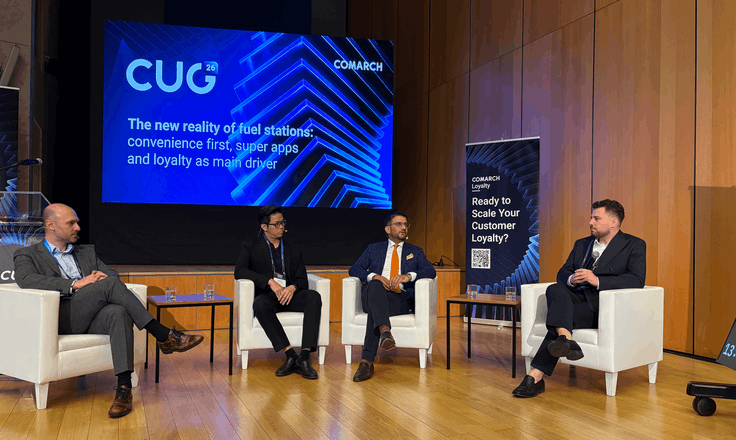
Nowhere is this more obvious than in the fuel and energy sectors, where top brands are completely reinventing the fueling experience. During CUG26, Petron shared how they turned a routine chore into a flawless, zero-friction interaction:
Imagine that—a program so perfectly designed that it runs itself in the background! This vision of a unified lifestyle experience was echoed by HELLENiQ ENERGY (collaborating alongside innovators like ENOC). They realized that consumers are experiencing massive app fatigue, and the only way forward is to consolidate value.
But energy companies aren’t the only ones tearing down traditional boundaries. Banco de Crédito BCP is pivoting a traditional banking brand into a massive coalition powerhouse boasting over 200 partner brands. They proved that loyalty should enhance a customer's life:
Trend 3: Behavioral Science Over Superficial Gamification
In 2026, consumers are experiencing major gimmick fatigue. The future of customer retention has officially moved past cheap tricks and is diving deep into genuine behavioral science and lasting habit formation. Younger audiences especially see right through old-school marketing tactics.
So, what does real, impactful gamification look like if it’s not an in-app mini-game? Intriguingly, it might mean encouraging your audience to look away from their screens entirely. As James went on to explain:
This masterclass in human psychology was backed up powerfully by Virgin Active. They took the stage and dropped a brilliant truth bomb: their wildly successful initiative succeeds precisely because it rejects traditional industry definitions:
Trend 4: AI Empathy and Precise Micro-Segmentation
You can’t slap a customer’s name at the top of an email and call it personalization anymore. The next massive frontier in data strategy is emotionally intelligent adaptation, powered by deep tech and precise micro-segmentation. Empathy decisioning will become more and more prevalent with the growth of AI usage.
And how does that look when applied to luxury and premium experiences? Azul Brazilian Airlines showed us how they weaponize granular data to elevate their top-tier members.
But this micro-targeted approach isn't just for airlines. It’s radically changing retail and fuel distribution on the ground, too. By leaning into localized demand signals, Ipiranga gave power back to the people who know the consumers best.
Trend 5: Loyalty Driving Real-World Wellbeing and Sustainability
One of the biggest changes we noticed in the industry is a massive elevation in purpose. Tomorrow’s leading programs are creating profound, positive impacts on customers' lives, health, and the very planet we live on.
Take Virgin Active’s experts, who reminded us that when you connect with people on an emotional level, traditional corporate jargon completely goes out the window.
The concept of shared impact and emotional connection is also completely revolutionizing modern sustainability efforts. More often than not, a green loyalty program has to meet the customers where they are if it wants to succeed.
With the right approach, you can even turn the abstract concept of the circular economy into a highly engaging, sticky customer journey. Gamify the recycling process and prove that a brand can be both a savior and a commercial powerhouse.
Together Towards Tomorrow: The Next Chapter of Loyalty
What an absolute whirlwind of innovation! If Comarch User Group 2026 proved anything, it’s that “Innovation Without Boundaries” is the definitive battle cry for the next generation of marketing. The future belongs to brands that can seamlessly balance rigorous financial math with deep AI empathy, real-world community building, and planet-first sustainability.
Our report on sustainable loyalty is a perfect asset to dive deeper into those themes. Get your copy now to navigate the AI energy paradox and build traceable, audit-ready data frameworks that protect your brand.