The Practical & Operational Architecture: How AI Agents Orchestrate Corporate Lending
- Published
- 5 min reading
Key Takeaways
- The lending system is shifting from a linear "track" to a case management hub with parallel workstreams.
- Specialized AI agents (document, financial, knowledge/compliance) work in parallel under one process layer.
- Continuous data flow turns credit analysis from a one-time step into an ongoing process.
- Less sequencing, less manual searching, less status-checking: more orchestration, interpretation, context, and decisions.
Corporate lending has always been a multi-threaded business matter. Documents, financial analysis, risk, collateral, and compliance checks all need attention at once. The question banks are asking now isn't whether to add AI to that picture. It's what AI orchestration is for a process this complex, and how it actually gets built.
This article picks up where our companion piece, Beyond Sequential Workflow: Redefining Corporate Lending Strategy with AI, left off: moving from the strategic case for combining process and AI into the practical architecture that makes it work.

What is AI orchestration in corporate lending?
In a traditional model, the credit system resembles a track along which an application moves from one stage to the next. In the new model, it increasingly resembles a case management hub. Financing a business requires parallel work across many areas at once: documents need to be understood, financial data verified, credit policy checked, risks named, collateral assessed, terms negotiated, and the final decision justified, all while the case stays coherent, auditable, and accessible to every team involved.
The future doesn't belong to a monolithic workflow, but to AI orchestration: a process layer that coordinates a set of specialized AI agents, each handling a distinct part of the case, in parallel rather than in sequence.
Meet the AI agents behind the modern lending process
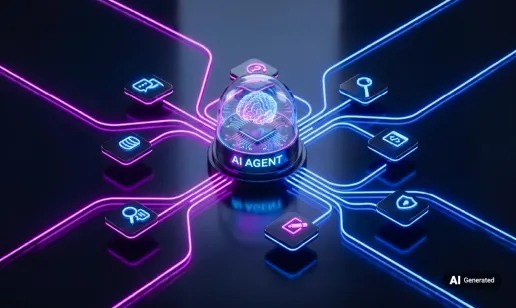
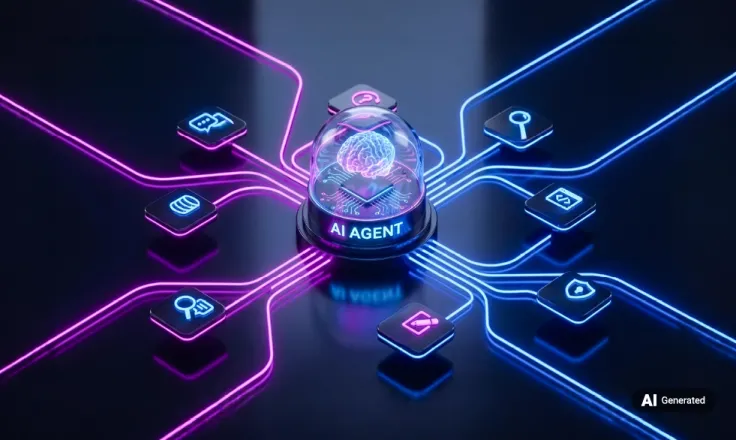
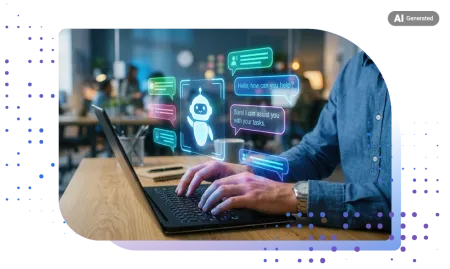
In an orchestrated model, specialized AI agents support individual areas of work, each with a clear scope. The Document Agent recognizes, classifies, and structures incoming documents. The Financial Agent analyzes financial indicators, cash flows, and anomalies. The Knowledge Agent helps interpret internal bank procedures and policies. The Compliance Agent supports verification of transaction compliance with regulatory and internal requirements.
This division of labor is a defining example of agentic AI in banking. Instead of one generalized system attempting every task, each agent specializes in a narrow domain and hands off structured, verified findings. The process layer then binds these agents' outputs into a single, controlled credit case. This is still banking built on rigor, accountability, and security. The difference is that banking standards are now reinforced by an intelligent layer of interpretation and recommendation that works beneath a case rather than replacing the controls around it.
How continuous, live analysis shortens the credit decisioning process
As data becomes more current, the nature of credit analysis changes with it. AI can interpret information as it changes, which means credit analysis no longer has to be a one-time stage triggered only once all documents are complete. It can become a continuous process, updated as new data arrives and the client's situation evolves.
This shifts banking away from a model of "waiting for the application" and toward one that understands context in real time. Increasingly, the relevant questions become: What is currently happening in this business? How has risk changed? Has a new financing need emerged? Which product best fits the current context? And which elements actually need a human decision?
Under this model, the credit decisioning process becomes a live decision workspace rather than merely a form, a document repository, or a task list. That shift in cadence shortens time-to-decision: much of the analysis is already up to date by the time a human reviews the case.
Why the competitive edge belongs to systems that understand context
Banks know very well that corporate credit is complex, and they know just as well that business clients expect speed, transparency, and a quick response. Nobody needs to explain to the market that credit processes are often weighed down by documents, exceptions, and manual work.
At this point, the answer isn't another simplified form, a cosmetic digitalization effort, or bolting AI on as a separate feature next to the existing process. The competitive advantage will go to whoever first builds an architecture that truly handles this complexity, one that combines two dimensions: a proven process architecture and an intelligent AI layer. Process ensures control, compliance, and security. AI provides interpretation, speed, and context. Together, they form a work model that is more parallel, more intelligent, and better matched to how a business client actually operates. This combination is where agentic AI in banking moves from a concept to an operating advantage.
As Dorota Sikorska, Product Manager for Credit Systems at Comarch, puts it, the shift can be summed up simply:
- Less sequence — more orchestration.
- Less manual searching — more interpretation.
- Less status-checking — more context.
- Less waiting — more decisions.
Corporate credit in the AI era won't be a simpler version of the old process. It will be a different way of thinking about decisions altogether.

How Comarch brings this architecture to life (CLO)
This two-layer model, a controlled process layer paired with specialized AI agents, is the architecture behind Comarch Loan Origination (CLO), Comarch's platform for corporate lending. As an AI loan origination system, CLO is built to let banks maintain the audit trail, roles, and compliance controls required by corporate credit, while adding AI-driven interpretation, document analysis, and recommendations that shorten the path to a decision.
If you haven't yet, it's worth starting with the strategic context behind this shift: read Beyond Sequential Workflow: Redefining Corporate Lending Strategy with AI for the case behind why process and AI now need to work as one system.
This article is based on "Koniec workflow w kredytach korporacyjnych? AI zmienia logikę decyzji" by Dorota Sikorska, Product Manager for Credit Systems, Comarch, originally published in Miesięcznik BANK (June 2026): bank.pl/koniec-workflow-w-kredytach-korporacyjnych. Dorota is responsible for the development of Comarch Loan Origination (CLO), Comarch's corporate lending platform.