
Global Technology Leaders Gather at Comarch User Group 2026
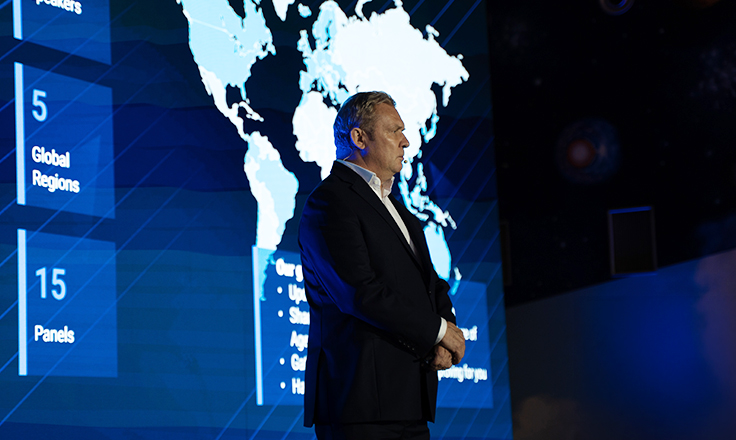
KRAKÓW, POLAND — Comarch invited global business leaders to its Kraków headquarters to jointly analyze the technologies redefining today’s market. From AI-driven customer experiences to the next generation of fintech and telecommunications networks, Comarch User Group 2026 (CUG26) offered a close look at the trends shaping the future.
Held under the theme “Together Towards Tomorrow: Innovation Without Boundaries,” the event brought together 703 clients and partners from 53 countries. The program featured 112 speakers, 15 panel discussions, and 8 dedicated stages. Comarch User Group (CUG) is an annual, invitation-only forum where leading global brands openly share their operational strategies, technical architectures, and tangible business outcomes. CUG26 went beyond standard corporate presentations, serving as a substantive knowledge-sharing platform focused on business pragmatism and real-world implementation.

Main Stage Highlights: Global Growth and the Reality of AI
CUG 2026 was opened by Comarch CEO Jarosław Mikos. The Main Stage sessions showed how companies can grow their business, implement AI, and build an advantage through people, technology, and an expanding presence in international markets.
“Our mission is to guide our clients through this new era by delivering concrete projects and features that change the world,” said Jarosław Mikos, President of the Management Board and CEO of Comarch. “Ultimately, everything we achieve — from operational excellence to Agentic AI and true transformation — must be driven by the potential of our people. We are consciously building a high-performance culture based on engagement and values, creating an environment that attracts the best engineers and global talent to Comarch.”
Attendees heard a discussion between Jarosław Mikos, CEO of Comarch, and István Szőke, Managing Partner at CVC, who addressed the management perspective on AI, the company’s future direction, and Comarch’s growing international presence. Tomasz Marciniak, Managing Partner at McKinsey Poland, followed with a high-level analysis of macroeconomic and technological trends defining today’s market standards.
The highly anticipated AI panel — featuring Comarch’s Dr. Łukasz Bolikowski and Wojciech Mach, alongside Michał Skowron from Google and Łukasz Foks from Microsoft — went beyond marketing hype. The discussion focused on the challenges of scaling global AI implementations and on the human dimension of technological innovation. Further strategic insights were shared by Sven Neweling of Deutsche Bahn, who spoke about stimulating commercial growth by embedding real sustainability values into loyalty mechanisms, and Manuel Alvarez Ruelas of Capgemini Spain, who offered a critical perspective on modern digital ecosystems.
The business sessions concluded with an inspiring keynote by Mateusz Kusznierewicz, Olympic champion and entrepreneur, on Sustainable High Performance. His presentation offered key lessons for today’s leaders on energy management and preventing professional burnout.

“It is about success and goals. Even if they are small. It does not have to be an Olympic championship or a world championship. Sometimes we have small goals, but when we achieve them, we feel great. In sport, we know that it is very important to believe that we can reach the goal. I imagine that your bar is also set very high. But if we believe we can get there, that makes a huge difference,” said Mateusz Kusznierewicz.
The first day concluded with a gala dinner at the Polish Aviation Museum, where participants had the opportunity to network surrounded by the history of aviation.

One Event, Five Thematic Tracks, and Global Leaders on Stage
How are leading international organizations implementing automated systems, modernizing key architectures, and scaling data-driven strategies? Participants found answers to these questions across five specialized thematic tracks: customer loyalty, telecommunications, banking, insurance, and e-invoicing.
1. Customer Loyalty: Next-Generation Engagement and Emotional Loyalty
- The Customer Loyalty track brought together 107 guests from 33 countries and 54 companies, who analyzed the industry’s clear shift toward behavioral loyalty — combining behavioral psychology, advanced technology such as AI empathy, and rigorous financial analysis to build lasting consumer habits.
- Workshops and panels: With 36 speakers and 4 panel discussions, the masterclass workshops enabled an in-depth discussion of solution architecture. Experts such as Len Llaguno of Kyros and Philip Shelper of Loyalty & Reward Co led interactive sessions focused on P&L financial mathematics in loyalty programs and AI-driven automated decision-making. Bright Insights Consulting and Envolved hosted sessions on gamification among Generation Z and innovative alternatives to standard 10% discounts.
- Strategic applications: The sessions featured leading global brands. McKinsey & Company presented a solution to “The Loyalty ROI Equation,” while 7-Eleven / Iconn and Ipiranga discussed reward systems in convenience retail and internationally recognized program mechanics. Leaders from Petron Corporation, ENOC, and HomePro debated nationwide technology transformations, complex lifestyle ecosystems, and circular economy loyalty models. The track concluded with insights from the Let's Talk Loyalty panel regarding global engagement lessons from the world's largest loyalty programs , alongside presentations from Virgin Active, Copa Airlines, Banco de Crédito BCP, and Forrester Research, covering behavioral strategies in wellness, large-scale international program infrastructure, next-generation banking coalitions, and frameworks for distinguishing real AI utility from marketing promises.
2. Telecommunications: AI-Driven Operations and the First IoT Connectivity Forum
- The Telecommunications track hosted 99 clients from 46 companies and 23 speakers. It opened with a keynote by Marcin Kaleta, Vice President of Comarch and CEO at Comarch Communications, who spoke about the division’s strategic expansion into satellite connectivity, critical infrastructure, and logistics.
- AI-driven infrastructure: Presentation highlights included Comarch Communications’ successful internal AI implementation — upskilling 1,500 developers in just four months with the support of 31 internal trainers. Product roadmaps were also presented, detailing a fully composable BSS architecture, real-time AI agents known as AI Hive, and the transition toward Level 4 Autonomous Networks using adversarial validation agents.
- Case studies and the IoT Connectivity Forum: Presentations showed that closer integration between IT and operational technologies helped reduce change management cycles from 52 to 38 days. Automated fault detection through Zero-Touch Networks and complex legacy system migrations were also discussed. In parallel, the inaugural IoT Connectivity Forum addressed Massive IoT in the 5G era, focusing on the API economy, stateless architectures for tens of millions of devices, and Agentic AI-based diagnostics. The track concluded by honoring key clients that have partnered with Comarch Communications for up to more than 20 years, including Orange, T-Mobile, Telefónica, Telekom Deutschland, Netia, KPN, and Bite Group.

3. Banking: Real Transformation Stories
- The Banking track focused directly on operational challenges and market realities in the financial sector. The introduction to this theme was delivered by Wojciech Mach, who focused on agentic intelligence, AI mesh architecture, and global scalability.
- Reclaiming the Day - Technology in the Service of Time: Marlena Brzosko and Saurav Vasudeva from Commercial Bank of Qatar - one of the largest commercial banks in Qatar - presented an inside look into a spectacular digital transformation driven by the rapid wealth growth in the local market. The speakers demonstrated how the institution tackled a monumental challenge: managing exponential business expansion while simultaneously executing a complete overhaul of its core technological infrastructure. The practical showcase of how this automated solution revolutionized advisors' daily workflows left a strong impression on the international audience. Through automation, the time required to generate a quarterly client report was slashed from 3 hours to just a single click, while operational error rates dropped to virtually zero.
- Future models: Operational panels featuring Bank Pekao focused on infrastructure realities, while other discussions centered on combining trusted human advisory with intelligent digital platforms. The sessions also covered complex turnaround processes with BRD – Groupe Société Générale and preparations for business banking in 2030 by treating platforms as complete operating systems for enterprises.

4. Insurance: Tomorrow’s Insurance Today
- The Insurance track combined the rapid pace of innovation with core systems modernization. It was opened by a powerful analogy on corporate resilience presented by Wim Smets, transformation expert and extreme mountaineer.
- Scaling implementation and virtual agents: Speakers from Ensur and Accenture BeLux addressed the industry’s key dilemma: how to modernize 30-year-old core systems and deploy AI in production without disrupting ongoing operations. Andrzej Wasilewski of Allianz Poland described in detail the journey from testing to production use of AI. He presented a working system in which a team of specialized virtual agents — Quality Controller, Classifier, and Domain Expert — performs repetitive document analysis processes in a human-in-the-loop model.
- The claims revolution: The operational perspective presented by MediHelp International focused on the rapid integration of healthcare and private insurance. Cees Werf of CCN Group demonstrated how Open Insurance and embedded transactions are changing the rules of the game by using real-time data for automated motor claims handling. The day concluded with presentations of Comarch product roadmaps and strategic analyses of RAG, Retrieval-Augmented Generation, AI assistants, and the concept of “smart laziness” as an operational philosophy.
5. E-Invoicing: Global Compliance and Automation in Practice
- The E-Invoicing track gathered 64 participants from nearly 20 countries. It combined complex regulatory issues with practical implementation examples and AI-driven business processes.
- Legal requirements and automation: High-level workshops and panels covered upcoming European ViDA, VAT in the Digital Age, standards, evolving regulations in Gulf Cooperation Council countries and the United Arab Emirates, and automated methods for structuring regulatory data using AI.
- Global leaders: The track discussed lessons learned from complex IT integrations and implementations in large global enterprises. Speakers included representatives of companies such as Uber, Porsche, Signify, Schwarz Corporate Solutions, Plansee Group, PwC Middle East, Alvarez & Marsal, JAGGAER, billentis, and PPN, Purchase to Pay Network.
Celebrating 20 Years of Comarch Factoring
In parallel with the main thematic tracks, an intimate celebration of the 20th anniversary of Comarch Factoring took place at Kraków’s Hotel Kossak. Instead of traditional product demonstrations, sector leaders and experts, including Karol Leszczyński and Mariusz Zwolski, outlined upcoming innovations. Clients who, together with Comarch, have spent two decades facing challenges related to debtor limits, regulatory requirements, and evolving risk models were also honored.

Looking Ahead to CUG 2027
The conclusion of CUG 2026 confirms Comarch’s commitment to reducing the distance between the potential of new technologies and concrete business reality. By fostering transparent global knowledge exchange and addressing the operational challenges of genuine digital transformation, the event set a clear benchmark for the coming year. Advanced strategic planning for the next edition of the conference is already underway, so that CUG 2027 can offer an even broader and more effective ecosystem for global business leaders.