P&V Expands Digital Insurance With Comarch Solutions
 Wealth Management in Forrester report
 Alliance Bank and Comarch Revolutionize Wealth Management in Malaysia




Comarch Financial Services is a business sector of the Comarch Capital Group. 20 years ago, the sector was run by just a few people who aimed high. Today, with unchanged attitude and thousands of projects completed all over the world, Comarch Financial Services stands out among the most successful IT system and financial software developers.
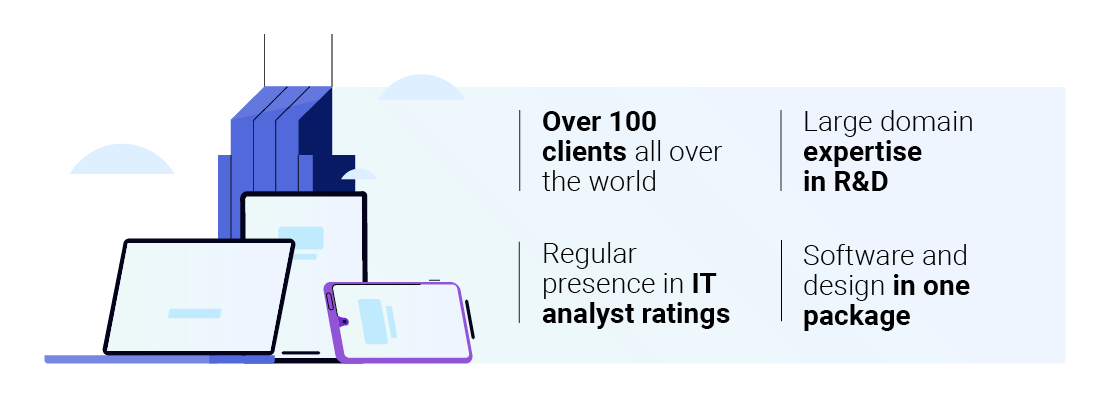
What distinguishes us from competitors is a constant drive for improvement. Our numbers speak for themselves: we cater to more than 100 clients, process 2 million new insurance policies a month, and boast regular presence in IT analyst ratings – from IDC to Gartner.
By keeping close tabs on business challenges of the finance world, we learn and grow each day. We do believe good financial software can make an impactful difference for any business enterprise.
Our systems such as Comarch Corporate Banking, Comarch Identity & Access Management or Comarch Transaction Protection ensure better process management, state-of-the-art security and greater profitability.
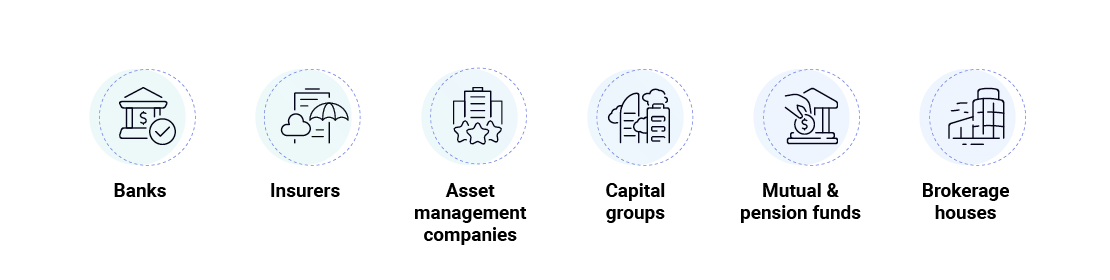
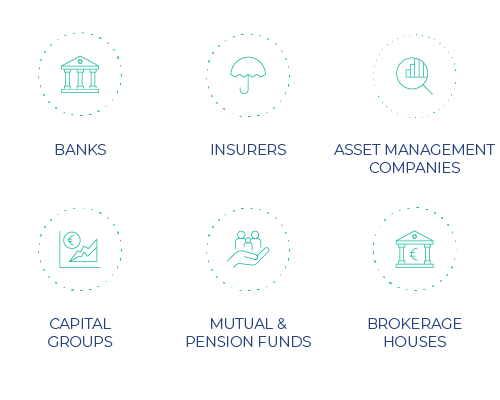
Comarch Financial Services is a provider of state-of-the-art IT solutions for banks, insurance companies, brokerage houses, asset management companies, as well as investment and pension funds. The systems and applications offered by us for the financial market are characterized by high quality, excellent performance and great flexibility. Our wide product portfolio allows for the precise selection of software that meets clients' expectations, preferences and capabilities.
In the Banking division, we pay particular attention to our products meeting the highest standards of functionality, convenience, reliability, and safety. Bank clients require an optimization of procedures and data flow in order to make business decisions more easily and effectively. All that and more is possible with Comarch Corporate Banking (CCB), a digital business banking system for corporations. Its modular structure allows the administration of a wide range of products and services, from liquidity management through trade finance. CCB’s twin solution is Comarch SME Banking, a digital banking system for small and medium enterprises, enabling the integration of external suppliers and fintech in order to easily generate an integrated ecosystem of services for entrepreneurs.
If a modernization of the loan process is necessary, Comarch Loan Origination (CLO) is here to help. The platform is both automated and manageable manually, which enables a complex and personalized approach to every customer. Comarch Wealth Management (CWM), on the other hand, is an excellent tool for finance counseling and overseeing of wealthy customers’ assets.
In the Insurance division, we keep pace with the ever-changing legal and business landscapes through persistent development of our IT systems. The job of an insurance agent should be assisted by a platform that completely digitizes pre- and after-sale customer service – such as Comarch Digital Insurance. It facilitates easy access to the full offer and documentation and enables omnichannel operations for end customers.
For fulfilling both front- and back-office duties, we have created Comarch Life Insurance and Comarch Non-Life Insurance, systems that support both life and non-life covers. These solutions simplify product definition, policy and finance management, report creation, and risk assessment. The last activity can be comprehensively assisted by Comarch Insurance Underwriting. The platform makes automatic risk assessments, which can later be manually verified by an underwriter. In the process of claim handling, Comarch Insurance Claims is irreplaceable; the system optimizes the procedure of claim registration, cost calculation, decision making, and due payment.
The mobile process of claim settlement can be upgraded with Comarch Field Service Management. All in all, the entire insurance company can be excellently supervised with Comarch Commission & Incentive, which is a system created to manage a company’s incentive pay and commission policy. It integrates all sales network data and allows an intelligent distribution of workforce inside the organization.
















Discover why Comarch Wealth Management shines in The Forrester Wave Report. Explore its strong performance in the industry. Stay informed with the latest insights!

P&V enhances digital insurance offerings with innovative Comarch Solutions, revolutionizing customer experiences. Stay updated with the latest advancements!

Discover latest trends and insights at the Thailand Wealth Management Forum in Kuala Lumpur. Join industry leaders for invaluable discussions.



Please wait